How Storytelling in Renders Builds Trust, Speeds Approvals, and Sells the Vision

Sinan Alajrad, Founder & Creative Director of SinanDesigns, partnering with interior design studios to create 3D visualisation that improves presentation clarity and speeds approvals.
A render can be technically perfect and still fail to move the project forward.
The lighting may be balanced. The textures may be sharp. The composition may be clean. Yet the client still hesitates.
They look at the image and say something like:
“It’s beautiful, but I still can’t feel it.”
“Something feels missing.”
That missing piece is often not accuracy.
It is story.
In many presentations, renders are treated as technical displays of a design. They show the layout, the materials, and the dimensions, but they stop short of creating emotional connection. And when a render does not create connection, the project can remain stuck in hesitation.
Because clients do not only approve what they understand.
They approve what they believe in.
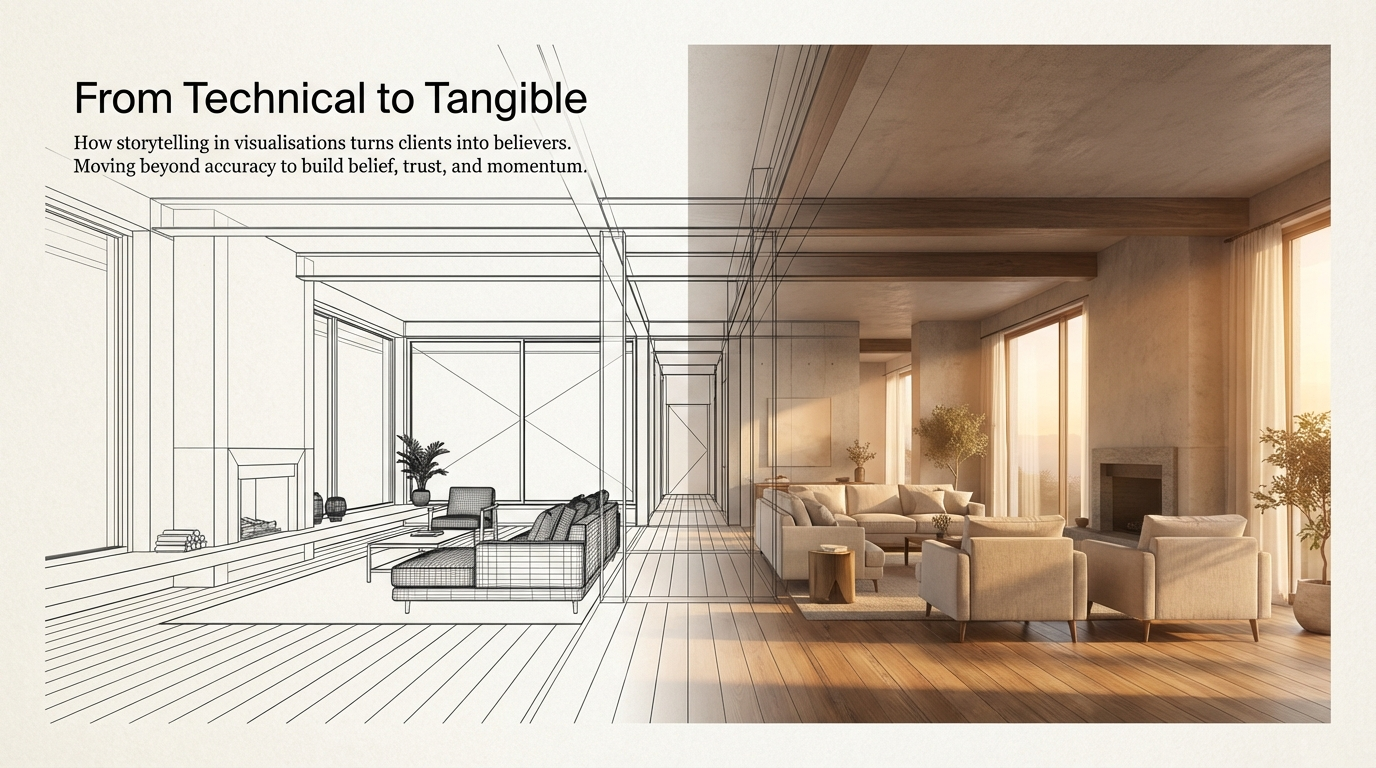
How Storytelling in Renders Builds Trust, Speeds Approvals, and Sells the Vision
Why technical accuracy alone is not enough
Accuracy matters. A professional visual has to communicate proportion, materiality, and design intent clearly.
But clarity on its own is not always persuasive.
A client may understand the room and still feel unsure about the outcome. They may see the plan, yet struggle to imagine the atmosphere. They may recognise the quality of the design, but not feel the experience of being inside it.
That is where storytelling changes the role of a render.
Instead of only showing what a project looks like, it starts showing why it matters.
How Storytelling in Renders Builds Trust, Speeds Approvals, and Sells the Vision
What storytelling in renders actually means
Storytelling in visualisation is not about making the image dramatic for its own sake.
It is about using visual decisions to guide emotion and meaning.
That can come through:
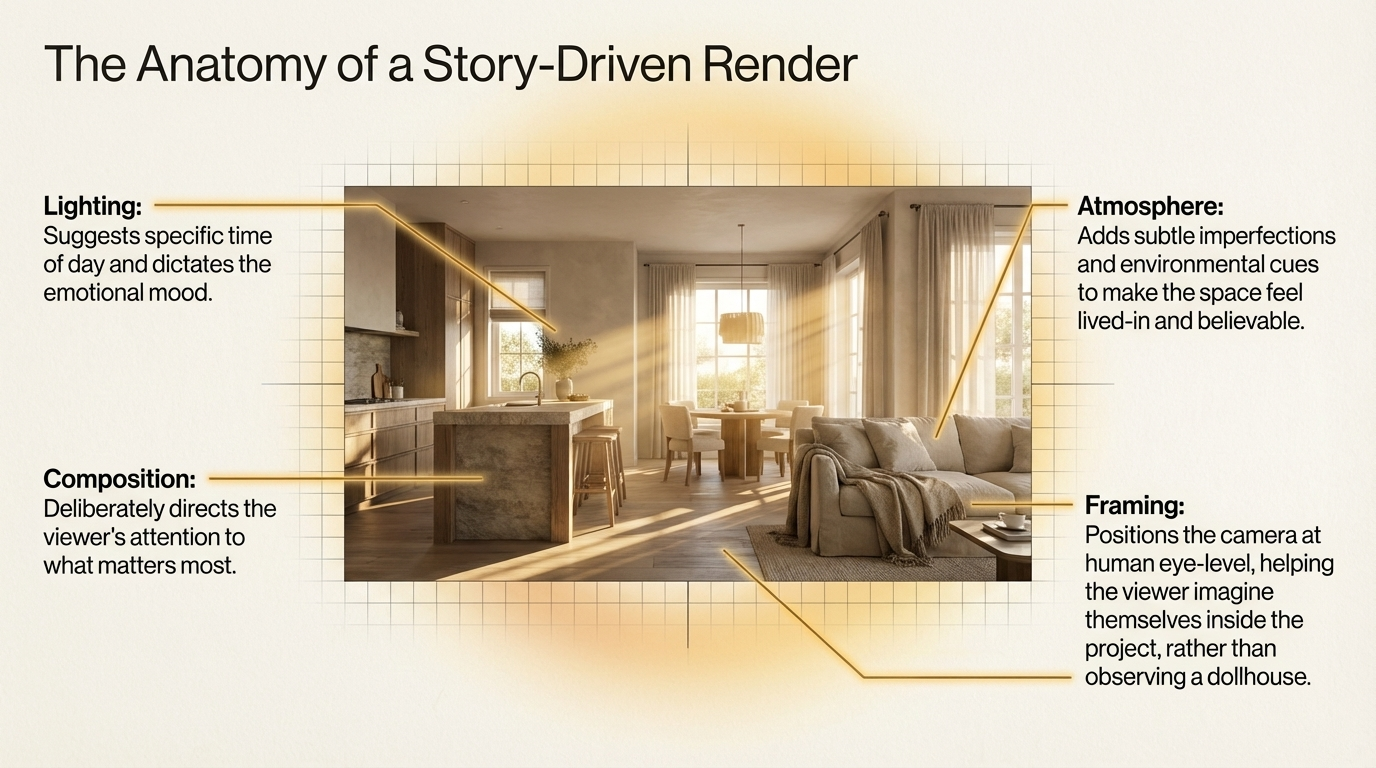
lighting that suggests time of day and mood
composition that directs attention to what matters most
atmosphere that makes the space feel lived-in and believable
framing that helps the viewer imagine themselves inside the project
When these elements work together, the render stops feeling like a static presentation board and starts feeling like an experience.
That shift is powerful because experience is easier to trust than abstraction.
Why emotion speeds approvals
Clients often delay decisions when they cannot fully connect the design to real life.
They may admire the visuals, but still feel unsure. That uncertainty creates slower feedback, more questions, and more revision rounds.
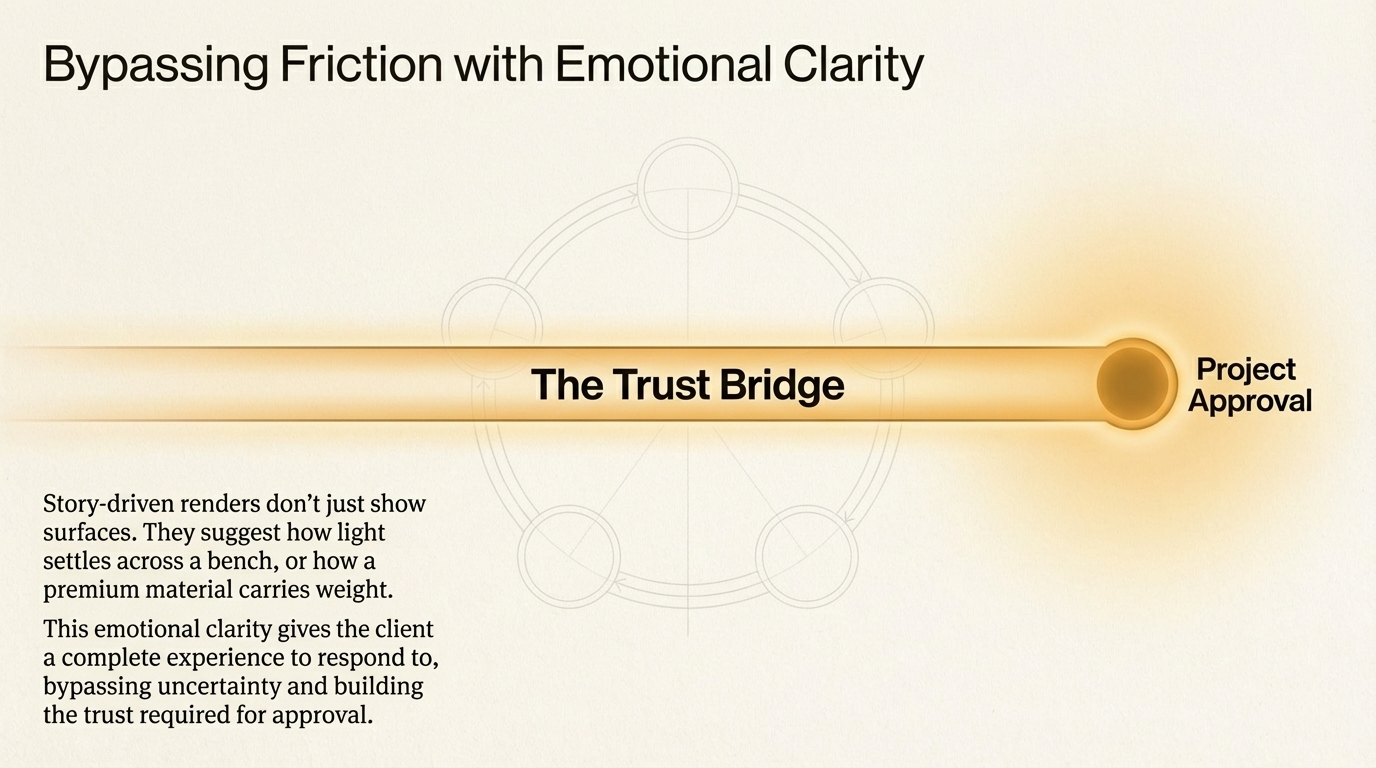
Storytelling helps reduce that friction because it gives the client something more complete to respond to.
A story-driven render does not just show surfaces. It suggests how the space feels in the morning, how light settles across a bench, how a room welcomes someone in, or how a premium material carries mood and weight.
That emotional clarity often makes decisions easier.
When clients can see the experience, they are far more likely to trust the direction.
And trust is what moves a project from interest to approval.
How storytelling helps real projects move faster
The difference between showing a space and selling a vision
A standard render can describe a project.
A story-driven render can sell the vision behind it.
That matters for:
interior designers seeking stronger client buy-in
architects presenting high-value concepts
builders trying to communicate confidence and quality
developers needing visuals that support pre-sales and momentum
In each case, the image is doing more than representing a design. It is building belief around it.
The three-part method behind stronger storytelling
A simple way to think about it is this:
1. Problem
Most renders show what a project looks like, but not why it matters.
2. Solution
Use lighting, composition, and atmosphere deliberately to create emotional connection and guide the viewer’s attention.
3. Product
Deliver a visual that feels real, believable, and persuasive, not only accurate.
This is the difference between an image that decorates a presentation and one that helps close the gap between concept and conviction.
What storytelling in renders actually means
How storytelling helps real projects move faster
When storytelling is used well in renders, it can improve several parts of the process at once.
It can:
make presentations more memorable
reduce hesitation in client meetings
create stronger emotional buy-in
support faster approvals
help premium projects feel more valuable before they are built
It also strengthens pre-sales and marketing because people tend to remember stories long after they forget specifications.
That is especially important when the goal is to sell the experience of a future space.
Why this matters in Adelaide
In a market where many presentations still rely on flat or purely functional imagery, stronger storytelling becomes a competitive advantage.
Studios that present with atmosphere and intent often create more confidence because they are not only explaining the design. They are helping the client feel the outcome.
That can make a real difference in how quickly a project gains momentum.
What a story-driven render should do
A strong render should not only look polished.
It should help the viewer:
understand the design clearly
feel the intended mood
recognise the value of the space
imagine themselves inside it
trust the project enough to make a decision
That is the benchmark.
Because when the image feels real, the conversation changes.
Final thought
Clients rarely hesitate because the render is too emotional.
They hesitate because the image is emotionally empty.
Technical accuracy builds credibility.
Storytelling builds belief.
And belief is often the thing that turns a beautiful design into an approved project.
FAQ
Why is storytelling important in architectural renders?
Because clients respond more confidently when a render communicates atmosphere, emotion, and experience, not just layout and finishes.
Do storytelling-focused renders help win approvals faster?
They often do, because they reduce uncertainty and help clients connect more quickly with the design intent.
What makes a render feel more emotional?
Lighting, composition, atmosphere, framing, and subtle cues that make the space feel believable and lived-in.
Who benefits from story-driven visualisation?
Interior designers, architects, builders, and developers all benefit when stronger visuals create trust, excitement, and clearer decisions.
If your presentations are technically strong but still not creating enough confidence, I help interior design studios craft renders that do more than show the design. They help clients feel it, trust it, and move forward.
Explore the work, or get in touch to discuss your next presentation.